AI Workflow
Design Systems
Storybook
Vibe Coding
Dev Handoff
Production Ready Design System in code using Antigravity.
A complete, production-ready component library built in Storybook using React
and Tailwind CSS — driven entirely by a single design.md context file and an AI
agent.
Project Type
Personal Exploration
Stack
React · Tailwind
Storybook
AI tool
Antigravity -
Gemini 3.0
Outcome
Live Design System
View live Storybook ↗
Overview
The problem in one sentence
Decisions made in design tools rarely survive the translation to code — tokens drift, component
variants multiply inconsistently, and the shared language between design and engineering erodes
over time.
What this project asked
What if an AI agent could receive a single, structured context file describing an entire design
system — and build it? Not scaffold it. Build it, verify it, and ship it.
Goals
Eliminate context drift
A single design.md file as the
unambiguous source of truth
— no repeated re-explaining
of intent across prompts.
Autonomous execution
Have the AI agent plan, build,
verify, and ship without
constant manual steering or
reconciliation.
Prove reproducibility
Establish a four-phase
workflow any project can
follow: document → plan →
build → verify.
Context
The gap between design intent and code reality
Every design system project starts with the same friction. Designers document decisions in tools
that engineers don't live in. Engineers interpret those decisions through their own mental models.
The gap compounds with every sprint.
The hypothesis: contextual continuity baked into a well-structured markdown file could replace
the back-and-forth that normally defines design-to-development handoff.
"The design.md file is not documentation. It is the source of truth — the single artifact from
which the entire system is derived."
Why this matters
Tokens drift without a ground truth
Without a single authoritative reference, color
values, spacing scales, and type sizes get re-
interpreted at every handoff point.
Component variants multiply inconsistently
Without documented states and variants,
developers build their own interpretations —
creating a fragmented system no one fully owns.
AI agents need context, not commands
Issuing commands one at a time to an AI without
persistent context produces inconsistent outputs.
Structured context files change this.
Handoff is where intent dies
The most common design-dev failure isn't bad
design or bad code — it's a broken translation
layer between the two.
The problem wasn't the AI's capability. It was the
absence of structured context to give it something
reliable to build from.
Approach
design.md as the single source of truth
Before writing a single line of code or issuing a single prompt, a design.md file was authored — a
structured reference document capturing every decision the design system needed to encode.
design.md — structure
# Design System Reference
## Theme
Brand identity, visual language, core values
## Design Tokens
Colors: primary, neutral, semantic
Typography: scale, weights, line-heights
Spacing: base unit, scale steps
## Icons
Icon set reference and usage guidelines
## Components
Accordion, Avatar, Badge, Alert,
Breadcrumb, Button, Card, Chip,
Divider, Header, Input, Navigation,
Progress, Sidebar, Skeleton, Table,
Tabs, Toast…
This file served as Antigravity's persistent context — referenced in every subsequent prompt so
the agent always had full awareness of the system's intent, not just its surface appearance.
The key prompt pattern
Rather than issuing build commands directly, the process began by asking Antigravity for a
recommended implementation plan. This generated a structured breakdown of initialization
steps, component sequencing, and a verification checklist — creating alignment before any code
was written.
—
Ask for a
plan first
— not execution. This step validates intent before code is written, collapsing the
most common source of design-dev misalignment.
—
Reference design.md in
every prompt
— persistent context means the agent never loses the thread
between sessions.
—
Build in
sequence
— foundation tokens first, then structural components, then interactive and
feedback layers.
Design Process
Four phases from file to live system
The build followed a clear sequence — not a waterfall, but a progressively expanding loop where
each phase validated the previous one before moving forward.
01
Author design.md
Document the full design system in a single markdown file — tokens, typography, spacing, icons,
and the complete component inventory. This becomes the AI's ground truth for the entire project.
02
Request an implementation plan
Prompt Antigravity to generate a step-by-step plan: Storybook initialization with React + Tailwind
CSS, component build order, and a verification checklist. Review and approve before proceeding.
03
Agent-led build
Antigravity executes the approved plan — scaffolding the project, building each component with all
required states and variants, wiring Storybook stories, and running verification steps autonomously.
04
Verify and ship
The agent validates each component against the design.md spec, confirms all states render
correctly in Storybook, and deploys the live system. Zero manual reconciliation required.
Solution
A complete component library across six categories
The resulting system covers the full range of UI primitives — from foundation tokens through
interactive components — with every variant and semantic state accounted for.
Foundation
Colors
Primary · Neutral · Semantic
Foundation
Typography
Scale + Weights
Structure
Accordion
Controlled · Uncontrolled
Misc
Avatar
Image · Initials · Icon
Misc
Chip
Default · Dismissible
Misc
Divider
Horizontal · Vertical
Misc
Table
Sortable · Static
Feedback
Alert
Success · Warning · Error
Feedback
Badge
Success · Error
Feedback
Progress
Bar · Indeterminate
Feedback
Skeleton
Multiple variations
Feedback
Toast
Multiple variants
Navigation
Breadcrumbs
Default · Overflow
Navigation
Header
Multiple layouts
Navigation
Sidebar
Collapsible
Navigation
Tabs
Underline · Pill
Actions
Button
Primary · Outline · Small · Large
Data Entry
Input
Default · Password · States
Every component was built with Storybook stories covering all states — ensuring the
documentation and the implementation never diverge. The live Storybook instance became the
handoff artifact itself.
The live Storybook instance became the handoff artifact
— not a separate doc, not a Figma file. The code and the
documentation are the same thing.
Outcomes
Context as the primitive, not prompts
The most significant insight from this build wasn't about speed — it was about how the speed
was achieved. Antigravity didn't require constant steering because the design.md file gave it
complete context upfront.
1
Context file drove the
entire build
20+
Components across
six categories
0
Manual reconciliation
passes needed
✓
Live Storybook
shipped and verified
Impact by category
Design–Dev Alignment
The design.md became a shared contract —
designers and engineers referenced the same
document, eliminating the translation layer where
intent normally dies.
Handoff Artifact
The Storybook instance replaced separate
documentation entirely — each component's
story is both the spec and the proof that it works.
Reproducible Workflow
The four-phase loop (document → plan → build
→ verify) is project-agnostic. Any system that
starts with a well-structured design.md can
follow the same process.
AI as Executor, Not Guesser
Persistent context turned Antigravity from a
black box into a reliable executor — it knew the
system's intent, not just the last prompt's
content.
Learnings
01
Ask for a plan before asking for execution.
The implementation plan step created a checkpoint where intent could be validated before any code
was written — collapsing the most common source of design-dev misalignment.
02
Context is the primitive, not prompts.
One well-structured markdown file delivered more reliable outputs than dozens of carefully worded
individual prompts. Persistent context changes the quality ceiling for AI-assisted builds.
03
Documentation and implementation should be the same artifact.
Storybook stories built alongside components meant the docs were always current. There was no
separate documentation step — the working code was the documentation.
04
The workflow is reproducible by design.
Any project that begins with a well-structured design.md can follow the same four-phase loop. The
AI agent becomes a reliable executor — this is a pattern, not a one-off.
In summary, I proved AI can build design systems by
Writing context before writing prompts
design.md as the single source of truth gave the
agent complete awareness before a single line
of code was written.
Planning before executing
Requesting an implementation plan first
validated intent and sequencing — eliminating
the most common handoff failure.
Building all states, not just happy paths
Every component includes full variant and state
coverage — the system works in production, not
just demos.
Shipping Storybook as the handoff
The live instance is both the proof of work and
the documentation — no separate deliverable
needed.
AI Workflow
Design Systems
Storybook
React
Tailwind CSS
Antigravity
Vibe Coding
Dev Handoff
The future of design systems isn't better tools. It's better
context.
Next Project
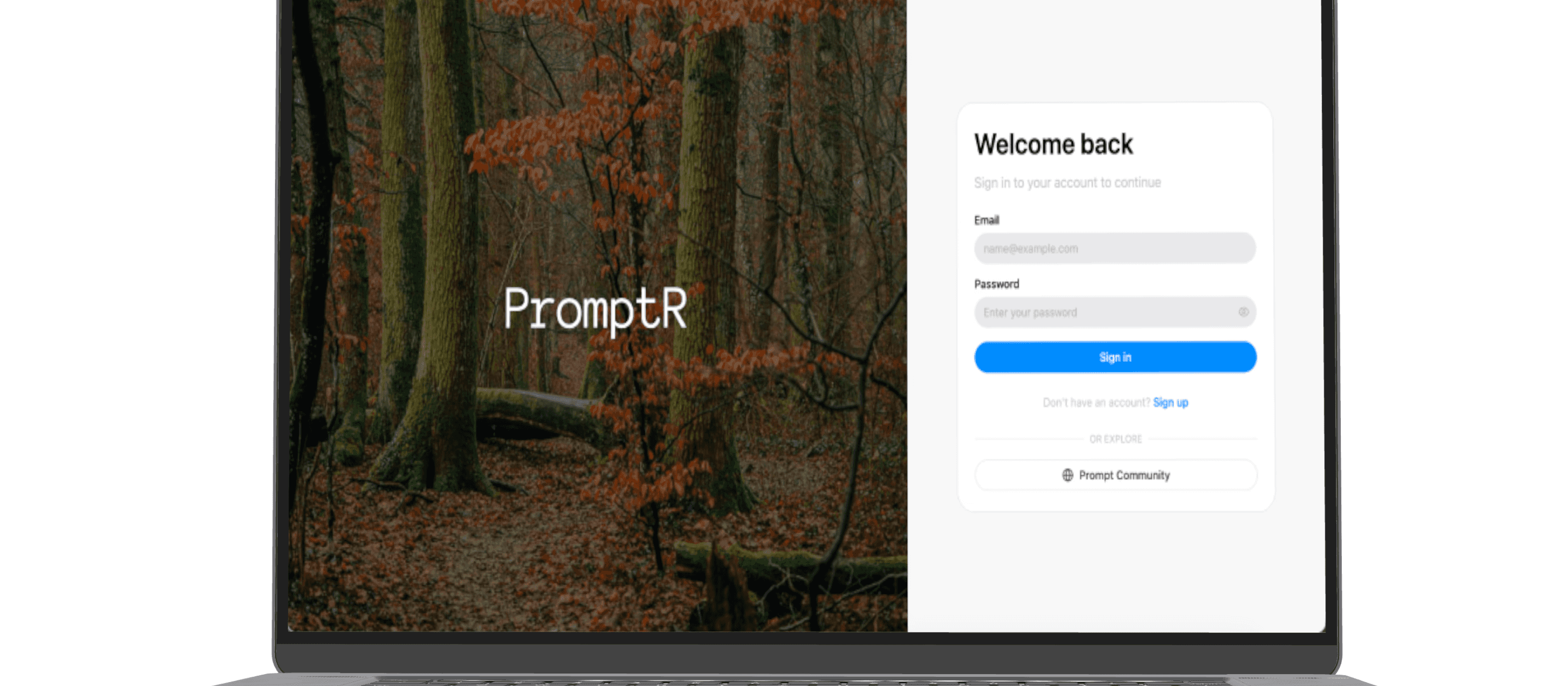
Agentic AI · Vibe Coding · Solo Shipped
PromptR — Prompt structuring tool with 30+ active users. Turns AI website builder
guesswork into a repeatable process.